
Switching from Tile to Colorbond®: Is a Roof Conversion Worth It?

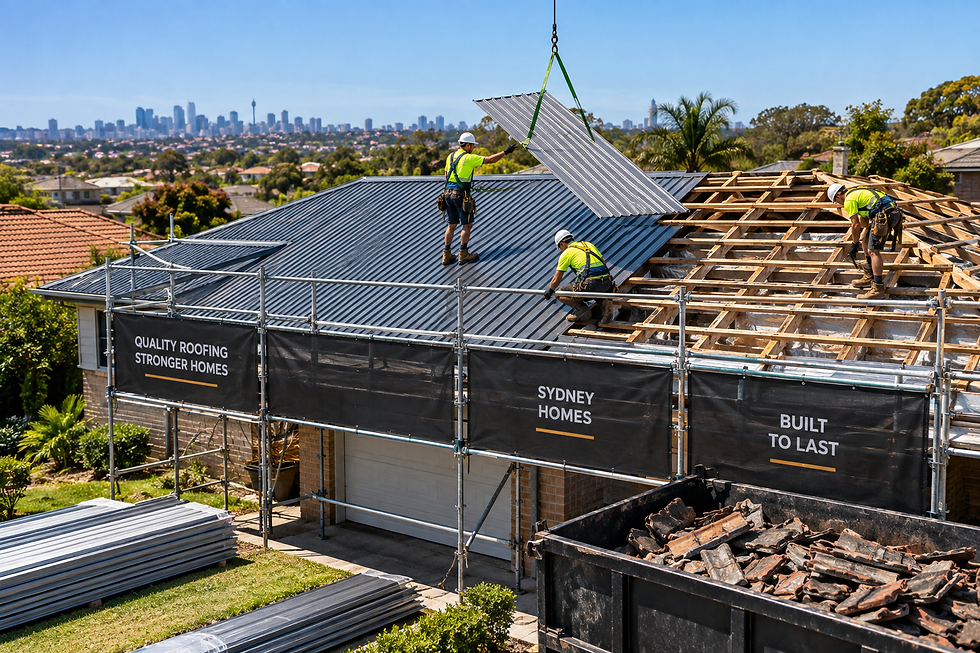
A tile to Colorbond® roof conversion replaces an ageing tile roof with steel sheeting during a full re-roof, rather than putting new tiles back on. Homeowners consider it when the old tiles are failing anyway and the frame is carrying weight it was never really designed for. The switch costs more upfront than staying with tile in some cases, but it changes how the roof behaves for the next 40 years.
Why Homeowners Switch from Tile to Colorbond®
The main reasons come down to weight, maintenance and performance rather than looks alone.
Concrete tiles weigh roughly 50 to 60 kilograms per square metre. Colorbond® weighs about 5 to 6 kilograms. On a 200m² roof, that is a difference of several tonnes sitting on the frame every day.
Five benefits drive most conversions:
• A much lighter load on ageing roof timbers and wall frames.
• No ridge re-bedding, re-pointing or tile replacement to budget for.
• Reflective colour finishes that bounce heat away in summer.
• A clean, modern street appearance that suits renovated homes.
• A 30 to 50 year lifespan from the day it goes on.
Lower long-term maintenance
Tile roofs need periodic repointing, tile replacement and recoating every 15 to 20 years. That is a recurring cost for as long as you own the house.
A Colorbond® roof mostly needs a rinse and a gutter clean. It will want recoating eventually, usually after 12 to 18 years, but there is no mortar work in the cycle at all.
Better heat performance
Colorbond®'s core colour range includes BlueScope's Thermatech® solar reflectance technology, which reflects more of the sun's heat on hot days. In Western Sydney, where Penrith recorded 48.9 degrees in January 2020, that matters more than it would closer to the coast.
Lighter colours reflect more heat than dark ones, so colour choice has a real effect rather than just a visual one. Tiles work differently. They carry heavy thermal mass, which means they heat up slowly and hold that heat into the evening rather than shedding it.
Neither approach is automatically better. Metal cools down faster once the sun goes off it, while tile evens out temperature swings. The difference shows up most in homes with limited ceiling insulation, which is exactly why a conversion is the right moment to upgrade sarking and insulation at the same time.
Fewer tiles to worry about after storms
Western Sydney sits in the most active hail corridor in New South Wales. The December 2018 Sydney hailstorm alone produced more than 81,000 insurance claims across the city.
Tiles and hail are a poor match. A hailstone can leave hairline cracks that look fine from the ground and start leaking a year later, which makes post-storm assessment slow and claims harder to argue. Metal dents instead of cracking, so the damage is visible straight away and the roof usually stays watertight while it is sorted out.
That is not a reason to convert on its own, but it is worth factoring in if you have already been through a hail claim on the current roof.
What a Tile to Colorbond® Conversion Involves

The conversion follows the same sequence as any full re-roof, with extra work at the start because tiles are heavy and slow to remove.
We strip the existing tiles and dispose of them properly, then inspect the frame with the roof fully open. Battens are replaced or adjusted where required, since tile battens and metal roofing need different spacing and fixings. Sarking or insulation goes in at this stage, because it is the only practical opportunity.
New Colorbond® sheeting then goes on, along with fresh flashings, ridge capping, and new gutters and downpipes to match the new roofline.
Our full re-roofing services page sets out the complete process if you want the detail step by step.
How Much Does a Tile to Colorbond® Conversion Cost?
A tile to Colorbond® conversion costs $14,000 to $22,000 for a typical 200m² single-storey Sydney home, rising to $46,000 for large or two-storey properties once scaffolding and access are priced in.
Conversion usually costs a few thousand more than replacing a metal roof like for like, because removing and disposing of tiles is heavier work than stripping sheets. Expect roughly $20 to $50 per square metre for removal and disposal alone.
Structural work is the other variable. Battens and framing repairs typically add $1,500 to $3,000, and sarking or insulation upgrades add $2,000 to $5,000.
Colorbond roof cost per square metre
Colorbond roof cost per square metre in Sydney runs about $92 to $205 installed as part of a re-roof. That figure covers the sheeting, fixings, flashings and labour, not just the material.
Profile changes the rate. Corrugated sits at the affordable end, while concealed-fix profiles such as Klip-Lok cost more per square metre. Roof pitch and complexity move it as well, since steep and multi-faceted roofs take longer.
Our replacement cost guide breaks the full pricing picture down by home size and material.
Things to Check Before You Convert
A conversion suits most homes, but there are three things worth confirming before committing.
Council and heritage restrictions
In most cases, standard like-for-like roof replacement does not need council approval in NSW. Changing the material is a different matter, and some heritage conservation areas or bushfire-prone zones do place conditions on what you can use.
Check with your local council before you order materials, or ask us during the inspection.
Structural suitability
Going lighter is rarely a structural problem, since you are removing load rather than adding it. The frame still needs checking, though, because decades of tile weight can leave timbers sagging or deflected.
Batten spacing also changes between tile and metal roofing, so budget for that work rather than assuming the existing battens carry over.
Whether it suits your home's style
Colorbond® suits most homes built from the 1970s onward, and looks particularly good on renovated or extended properties. On a federation or heritage home with terracotta, changing material can look out of place on the street and may reduce appeal to the buyers most interested in that style.
If you like the tile look and the structure is sound, restoring what you have may serve you better. Our comparison of Colorbond and tile covers how each material performs over time.
How long the job takes
A tile to Colorbond® conversion takes 5 to 10 days on a typical home, which is longer than a like-for-like metal replacement at 3 to 7 days. The extra time goes into stripping and removing the tiles.
Your home is open to the weather for part of that window, so the crew works in sections and makes the roof watertight at the end of each day. Winter jobs carry more weather risk, and a rain delay can add days to the schedule.
Plan for a week of contingency either side, particularly if you are booking around other trades.
Is a Conversion Worth It for Your Home?

A tile to Colorbond® conversion is worth it when the tile roof needs replacing anyway, because you are choosing between two materials at the same moment rather than paying extra to switch early.
It makes the most sense on homes over 20 years old with tiles that are consistently cracking, where the frame shows signs of carrying too much weight, or where you plan to stay long term and want the maintenance cycle gone.
It makes less sense if the tiles are structurally sound. In that case a roof restoration buys another 10 to 15 years for a fraction of the cost, and the conversion conversation can wait.
Tile to Colorbond® Conversion FAQs
Can I convert my tile roof to Colorbond®?
Yes, converting a tile roof to Colorbond® is a common upgrade during a full re-roof. The old tiles are removed, battens adjusted if needed, and new Colorbond® steel sheeting installed with fresh flashings and ridge capping.
Is switching from tile to Colorbond® worth it?
It depends on your goals. Colorbond® is lighter, lower maintenance and can improve energy efficiency, but the upfront cost is usually higher than a like-for-like tile replacement. It tends to make the most sense when the roof needs replacing anyway.
How much does a Colorbond® roof cost per square metre?
A Colorbond® roof costs roughly $92 to $205 per square metre installed in Sydney as part of a full re-roof. The range covers sheeting, fixings, flashings and labour, and moves with profile choice, roof pitch and access.
Find Out If Conversion Suits Your Roof
The only way to know whether a conversion makes sense on your house is to look at the roof and the frame together.
We inspect both, tell you honestly whether conversion, like-for-like replacement or restoration is the better spend, then give you a written scope and price. Book your free inspection or call 0430 847 744 to arrange a time.


Comments